Your Refill History Knows More About Your Health Than You Think: A Privacy-Minded Guide to Your Pharmacy Data
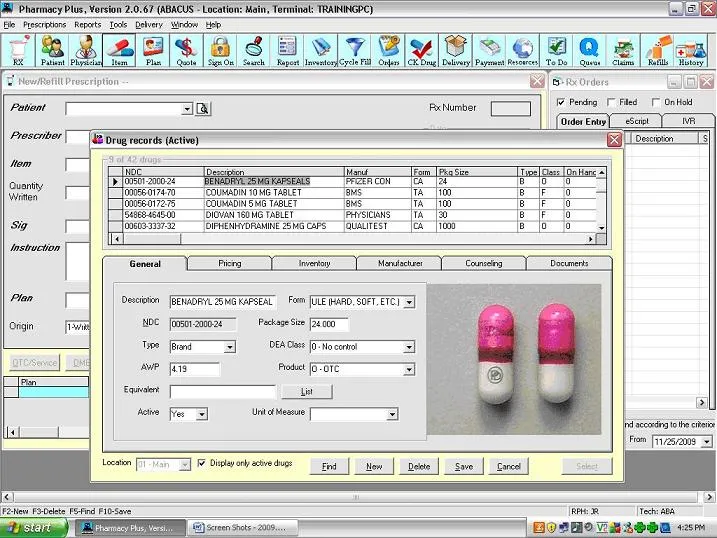
Photo: pharmacy prescription records computer screen pharmacist, via www.abacusrx.net
Most Americans think of the pharmacy loyalty card as a way to shave a few dollars off a copay. In reality, it functions as something closer to a longitudinal health record — one that quietly documents your diagnoses, your adherence habits, and even the moments when your health began to slip.
Unlike your medical chart, which you can request under HIPAA, your pharmacy data lives in a murkier corner of the healthcare system. Understanding what it says about you — and who can read it — is one of the most overlooked steps in preventive health.
The Story Your Refills Tell
A prescription history is surprisingly revealing. Refill gaps on a blood pressure medication might signal cost barriers or simple forgetfulness. A sudden new statin prescription hints at a recent cholesterol diagnosis. Patterns of overlapping opioid fills, duplicated medications across multiple pharmacies, or long stretches without renewing a critical drug can flag emerging risks long before a doctor's appointment does.
Pharmacists see these patterns in real time. So, increasingly, do algorithms. Medication adherence data is used to score patients for everything from care-management outreach to risk stratification by insurers. In other words, the person most likely to benefit from reading your refill history — you — is often the only one who never looks at it.
Your Pharmacy Data Is Not Fully Protected by HIPAA
Here's where many consumers are caught off guard. While HIPAA covers pharmacies as healthcare providers, prescription records can still travel further than most people assume.
- Data brokers and analytics firms have historically purchased pharmacy-level data stripped of names but linked to identifiers like birth date and ZIP code — a combination researchers have repeatedly shown can re-identify individuals.
- Insurers see your claims and fill data as part of processing and care management.
- Marketing programs tied to loyalty cards can correlate over-the-counter purchases with prescription data unless you've opted out.
The 2023 Dobbs decision added new urgency: prescription records for medications that can affect pregnancy have become a genuine privacy concern in several states.
Turn Your Refill History Into a Personal Health Audit
Used defensively, your pharmacy record is a free diagnostic of your own habits. Request your full fill history from your pharmacy — most chains can print it or provide it through their app within minutes — then ask yourself four questions:
- Am I actually finishing what I start? Gaps longer than a few days on chronic medications are a red flag worth raising with your physician, not hiding.
- Do I have duplicate therapy? Fills at two pharmacies can lead to dangerous interactions your pharmacists can't see.
- Has anything lapsed? Preventive prescriptions — statins, anticoagulants, inhalers — that quietly expired deserve attention before symptoms return.
- Does the list still match my life? Old medications for conditions you no longer have clutter your profile and skew the picture others see.
Practical Privacy Steps You Can Take Today
You cannot remove prescription records from the healthcare system — nor should you; they keep you safe. But you can limit the peripheral exposure:
- Skip or minimize loyalty programs that link purchases to marketing profiles, or review their privacy policies for data-sharing language.
- Opt out of data sharing where your pharmacy allows it, and exercise state privacy rights where they exist — California, Texas, and Washington offer stronger protections than federal law.
- Consolidate your prescriptions at one pharmacy to reduce fragmentation and improve interaction screening.
- Ask questions about cash purchases. Some patients handling sensitive prescriptions choose to pay cash and decline loyalty tracking, though you should never sacrifice needed care for privacy.
- Request an accounting of disclosures from your pharmacy to see where your data has gone.
The Bottom Line
Your refill history is a health document in the truest sense — one that captures adherence, risk, and trajectory more honestly than most patient self-reports. Read it once a year, the way you'd review a bank statement, and correct what's wrong. Then take reasonable steps to decide who else gets to read it.
Preventive health isn't only about what you do for your body. It's about knowing what the system already knows about you — and making sure that knowledge works in your favor.