The Second Opinion You Didn't Ask For: How Your Pharmacist Catches What Your Chart Misses

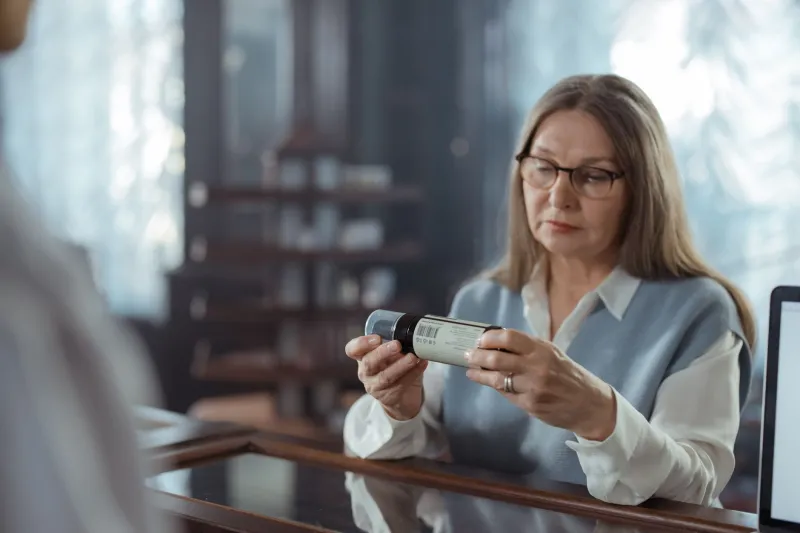
Most Americans think of their pharmacist as the person who hands them a paper bag and asks if they have questions. Fewer realize that behind the counter, a parallel clinical review is happening in real time — one that frequently surfaces problems no single physician could catch.
The reason is simple: pharmacists see the whole picture. Your cardiologist knows what she prescribed. Your primary care doctor knows what he prescribed. Your pharmacist knows both — plus the ibuprofen you bought last week, the sleep aid from the front aisle, and the supplement you mentioned offhandedly in the drive-thru lane.
The Software Never Forgets
Every prescription filled in the United States passes through clinical decision support software that screens for drug interactions, therapeutic duplication, dosing anomalies, and refill irregularities. When a new prescription arrives, it's checked against your complete fill history at that pharmacy — and increasingly, against records shared through interstate data exchanges.
The alerts that fire are ranked by severity. Most are routine: a minor interaction between a statin and a glass of grapefruit juice warrants a note, not a phone call. But the serious ones — the combinations that can land someone in the emergency department — trigger what pharmacists call a "hard stop." The prescription doesn't dispense until a pharmacist intervenes.
"The system flags things physicians genuinely can't see," says one hospital-affiliated community pharmacist in Ohio, who asked to speak generally about her workflow. "A specialist writes for one drug, another doctor writes for something that interacts with it, and nobody connects the dots until both prescriptions land on my screen on the same Tuesday afternoon."
The Combinations That Raise Red Flags Most Often
Pharmacists describe several recurring patterns that generate the most serious alerts:
Daily NSAIDs plus blood pressure or kidney medications. Over-the-counter ibuprofen and naproxen are among the most purchased drugs in America, and many patients don't think of them as "medications" worth mentioning. Taken regularly alongside ACE inhibitors, ARBs, or diuretics, they can strain the kidneys and blunt blood pressure control. This interaction is flagged so often that many pharmacies now print warnings automatically.
Duplicate therapy from brand and generic confusion. A patient takes prescription Nexium and picks up store-brand omeprazole without realizing they're the same drug at different prices. Therapeutic duplication alerts catch this constantly.
Blood thinners and forgotten supplements. Fish oil, ginkgo biloba, turmeric, and high-dose vitamin E all carry mild anticoagulant effects. On their own, unremarkable. Layered onto warfarin or apixaban, they compound bleeding risk — and because supplements aren't prescriptions, they only enter the record if a patient volunteers the information.
The refill gap pattern. Software also tracks timing. A blood pressure medication that goes unfilled for two months, then suddenly refills, signals a lapse in therapy that no prescriber may have noticed. Pharmacists routinely flag these gaps and call the physician — often prompting the first conversation about whether a patient stopped taking something and why.
Why the Doctor Didn't Know
This isn't a failure of physicians; it's a failure of information flow. A 2024 survey by the American Society of Health-System Pharmacists found that fewer than half of patients report telling their doctor about all over-the-counter products and supplements they use. Reconciliation — the formal process of listing every medication at every visit — happens inconsistently outside of hospital admissions.
The pharmacist, meanwhile, has an objective, timestamped record. If you bought naproxen three times last month, it's in the system whether or not you remembered to say so.
Getting Your Free Medication Review
Most patients don't know that Medicare Part D plans are required to offer a comprehensive medication review at no cost to enrollees who take multiple medications, and that many commercial plans and pharmacy chains offer similar services to anyone who asks. Depending on the chain, this may be called a medication therapy management (MTM) session, a comprehensive medication review, or simply a medication check-up.
What to do:
- Consolidate your prescriptions at one pharmacy when practical. Fragmented filling across multiple stores fragments the safety net.
- Ask specifically for a medication review — not just "any questions?" at pickup. Many pharmacies schedule these as 20-minute appointments.
- Bring or list everything, including supplements, gas-station pain relievers, and sleep aids from the grocery aisle.
- Ask about medication synchronization. Most major chains will align all your refills to a single monthly pickup date, which both improves adherence and gives the pharmacist a regular checkpoint to review the full regimen.
A Quiet Form of Prevention
None of this replaces your physician, and pharmacists are quick to say so. But in a health system where the average older American takes four or more prescription drugs — often prescribed by different hands — the pharmacy counter has quietly become one of the most effective safety checkpoints in American medicine.
The next time your pharmacist asks, "Do you have any questions?" consider that they may already know something worth discussing. The better question is yours to ask: "Is there anything in my history I should know about?"
That answer is free. And it's backed by someone whose entire training exists to catch what slips through.