Same Doctor, Different Building: Why Your Office Visit Can Cost 10 Times More Down the Street
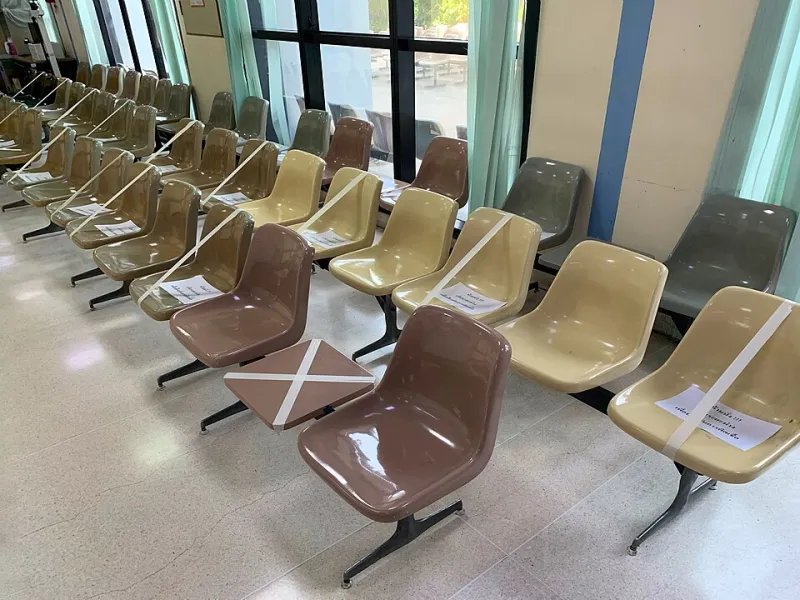
Photo: Chainwit., CC BY-SA 4.0, via Wikimedia Commons
The appointment goes exactly as planned. You see your physician, the visit runs fifteen minutes, your questions get answered. Then the bill arrives — and it's ten times what you paid for the identical visit last year.
Nothing changed about your care. What changed is the building.
The Hidden Line Item on Your Medical Bill
When a hospital system buys a physician practice, something subtle happens: the same doctor, treating the same patient in the same exam room, can now bill a "facility fee" — an extra charge covering the cost of the building, its staff, and its overhead. That fee did not exist when the practice was independently owned.
Facility fees were originally designed for hospitals, whose overhead is genuinely higher: emergency departments running around the clock, imaging machines, intensive care units. But as health systems have acquired thousands of independent practices across the country, the fee has followed patients into ordinary outpatient settings — including visits that would be indistinguishable from a trip to a private doctor's office.
The result is a pricing structure in which geography and ownership, not medical complexity, drive much of the cost. A routine office visit billed in a hospital-owned clinic can carry a facility fee of several hundred dollars on top of the physician's charge. The same visit, in a freestanding practice, typically does not.
Why the Same Visit Has Ten Different Prices
Several forces converge to make one appointment cost wildly different amounts depending on where it happens:
Ownership of the practice. Hospital-affiliated clinics generally bill facility fees; independent practices generally do not. Studies of commercial claims data have found hospital-owned physician groups charge substantially more for identical services.
Site of service. A skin biopsy performed in a hospital outpatient department can cost multiples of the same procedure done in a dermatologist's standalone office. Same scalpel, same pathologist, very different total.
Negotiated rates. Insurers contract separately with each facility. A system with significant market power in a region can command higher rates from every insurer at the table — costs that flow back to patients through deductibles and coinsurance.
Billing complexity. More overhead — compliance departments, chargemaster pricing, layers of administration — gets built into the rates facilities negotiate, whether or not the patient benefits from any of it.
Who Actually Pays
Patients with commercial insurance often assume their insurer absorbs these charges. In practice, facility fees flow through to the patient in two ways: directly, through deductibles, copays, and coinsurance calculated on the inflated total; and indirectly, through premiums that rise as claims costs climb.
Medicare has moved to rein in some of the most extreme examples — as of 2024, Medicare pays facility fees at a lower rate for many services provided at off-campus hospital departments, and some commercial insurers have followed suit. But coverage varies widely, and patients with high-deductible plans remain squarely exposed.
How to Spot an Inflated Bill Before You Owe It
You cannot control how your doctor's practice is owned. You can control where you book and how you read the paperwork.
Ask the ownership question at scheduling. A single question does most of the work: "Is your practice independent, or owned by a hospital system?" If it's hospital-owned, ask whether a facility fee will be added and what the total estimated cost is for your visit.
Use your insurer's cost estimator. Most major insurers offer online tools that show expected costs by facility. The same CPT code — the billing code for your visit or procedure — can be compared across locations in your network.
Watch for the telltale claim format. On an explanation of benefits, a facility fee often appears as a second line item with a hospital's name, billed alongside the physician's professional fee. Two charges for one appointment is the signature.
Compare the same service across settings. For routine imaging, labs, and standard office visits, ask whether the test can be performed at a freestanding imaging center, an independent lab, or the physician's own office rather than a hospital department.
Appeal the surprising ones. If a facility fee appears on a bill you didn't anticipate, request an itemized statement, ask the provider to explain it, and file an appeal with your insurer if the charge wasn't disclosed up front. Some systems will reduce or waive fees for patients who push back, particularly for self-pay balances.
Check the No Surprises Act protections. While that law primarily targets out-of-network emergency and ancillary billing, asking for a good-faith estimate when you're uninsured or self-pay is now a federal right — use it.
A Preventive Habit Worth Building
Most people treat medical pricing as weather — something that happens to them. But cost, like blood pressure, responds to monitoring. The patients who consistently pay less are not necessarily the ones with better insurance. They're the ones who ask where a service will be performed, what will be billed, and whether a lower-cost setting exists, before the appointment rather than after the bill.
Healthcare in the United States will not become transparent through goodwill. It becomes navigable one question at a time — starting with the one you ask the front desk before you ever sit down in the waiting room.